 Ketaabzi
→ فارسی
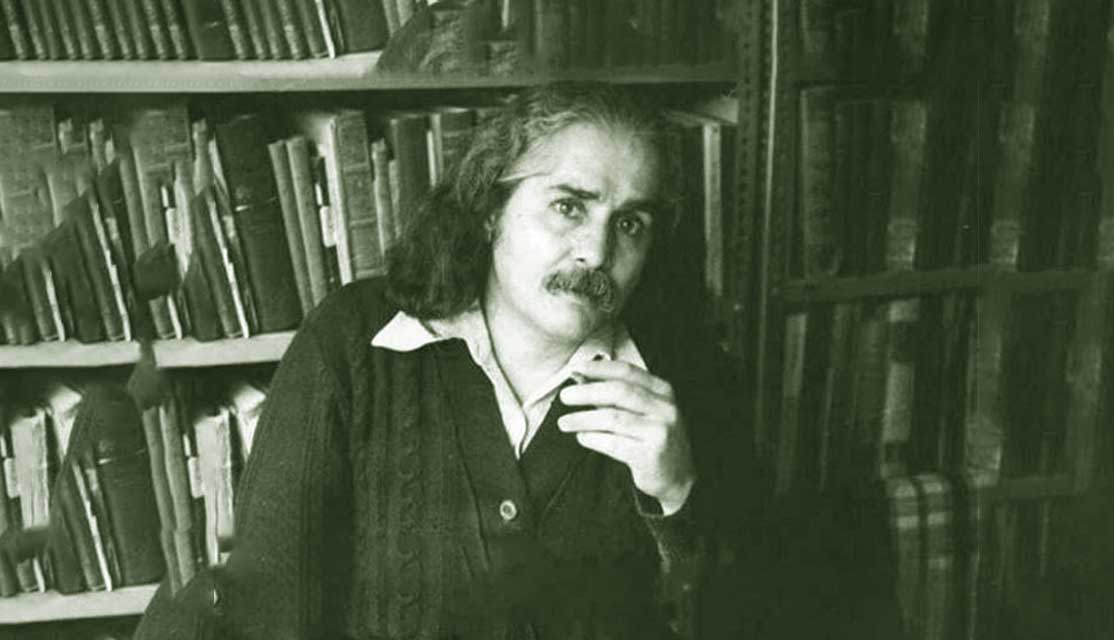
Nosrat Rahmani is one of the prominent figures of contemporary Persian poetry. While being connected to the official currents of poetry, he remained faithful to lived individual experience, the bitterness of urban life, failure, loneliness, and marginalization. His poetry continues the line that began with Nima, but instead of purely linguistic experimentalism, it relies on the raw existence of contemporary man. Rahmani is a poet whose language is often wounded, direct, and explicit, and for this reason, he constantly moves along the border between poetry, confession, and narrative. He is among the few contemporary poets who, in his conversations and interviews, maintains that same bitter honesty and ruthless poetic gaze. His interviews, later collected through the efforts of Arash Rahmani in the book The Mirror of Relation (Negah Publications, 2014), are oral documents of contemporary literary history and thought‑provoking texts on the relationship between the writer, society, and suffering. One of these conversations is his 1976 interview about Sadegh Hedayat. In Rahmani's words, we see an honest and multi‑layered rereading of Hedayat's personality and works.
Nosrat Rahmani and Sadegh Hedayat: A Constantly Changing Understanding
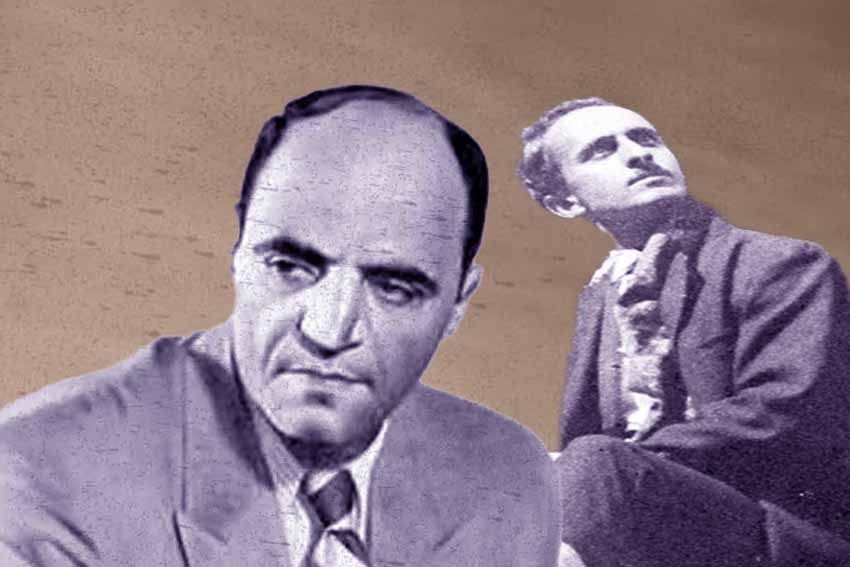
In this interview, Rahmani describes his encounter with Sadegh Hedayat as gradual and variable. He says he came to know Hedayat "very early," at a time when he had neither clear criteria for judgment nor was mature enough to measure Hedayat against his own intellectual standards. This admission itself demonstrates Rahmani's honesty; he does not speak from an omniscient position. At first, Rahmani encountered Hedayat through Dash Akol and then The Blind Owl, but he emphasizes that this was not the same human Hedayat he would come to know later. Hedayat's suicide and the fame that followed sparked a new wave of fascination in him and his generation. But after this "storm" subsided, Rahmani reread Hedayat's works and this time arrived at a different face. In part of the interview, he says: "He was a pessimistic and somewhat oversensitive man. And when I immersed myself in his works, I came across a writer for whom the harshness of life and the cruelty of time were utterly unbearable." Nevertheless, Rahmani clarifies that these criticisms "do not diminish anything from Sadegh." He sees Hedayat as a human being who did not find his way. A man who, in Rahmani's view, was not at peace with the simple, earthly realities of life. In part of the interview, he says: "He felt that being born in Iran was an injustice done to him. In my early youth, I often saw him at writers' hangouts and was captivated and enchanted by him. Every time I think about Sadegh, I see a man who did not find his way. Well, Sadegh could not understand that there is a job called 'driving' and sitting behind the wheel of a diesel truck, and that it is a very honorable job."
Hedayat, Existentialism, and the Failure of an Alternative
In Rahmani's view, Hedayat was deeply entangled with existentialist ideas – ideas clearly visible in works such as The Stray Dog and The Blind Owl. He believes that Hedayat attacked the bourgeoisie without being able to find a school or alternative to fill its void. This very absence of an alternative, Rahmani argues, upset Hedayat's psychological balance and ultimately led him to suicide. Here, Rahmani speaks as a poet from the perspective of human experience. He first traces Hedayat's footsteps in Kafka, and then in French literature – the literature Hedayat was infatuated with, to the extent that he even felt "being born in Iran was an injustice done to him."
The Blind Owl: A Novel That Is Poetry
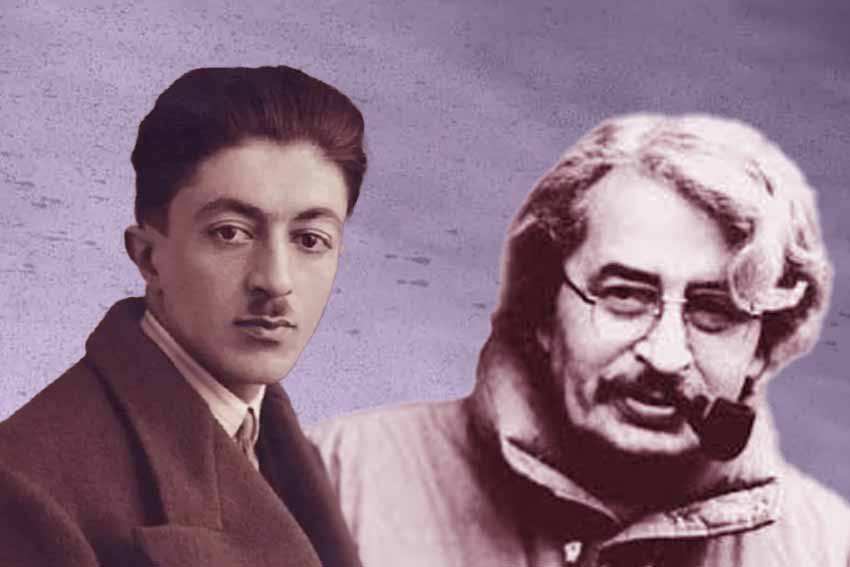
One of the notable points in this interview is Rahmani's emphasis on the poetic nature of The Blind Owl. He states unequivocally: "The Blind Owl is poetry from beginning to end." Although he believes Hedayat was not particularly knowledgeable about poetry in its technical sense, there is in his works, especially The Blind Owl, a kind of unconscious, fluid poetry. Here, Rahmani levels a serious critique at Orientalists such as Henri Massé and Roger Lescot, who, in introducing Hedayat, neglected this poetic dimension. In the interview, he says: "Unfortunately, we are poor in examining our own literary works. Our literary history must be written by Edward Brown[e], or, for example, Rumi must be edited by Nicholson. And that with a perspective that cannot be fully trusted to be authentic."
Final Judgment: Unflinching Praise
Despite all the criticisms, doubts, and rereadings, Nosrat Rahmani's final judgment is clear and direct. He says that if asked who is the greatest writer of Iran, he will immediately answer: Sadegh Hedayat.