 Ketaabzi
→ فارسی
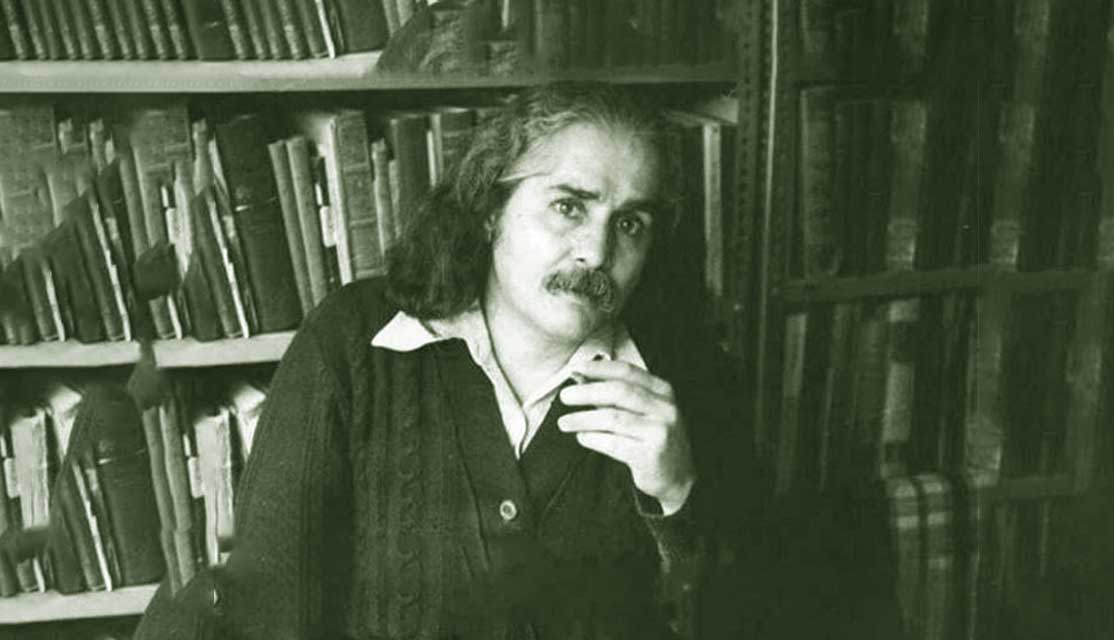
On Art and Literature: A Dialogue with Mehdi Akhavan-Sales is one of the rare books in which we can hear the unmediated, thoughtful voice of one of Iran's greatest contemporary poets, without embellishment or digression. The book is the result of a series of conversations between Naser Hariri and Mehdi Akhavan-Sales (M. Omid), conducted in the final year of the poet's life (first edition 1989), and is part of Hariri's series of dialogues with Iranian artists. Its second edition was published by Avishan Publications (2005) and remains a primary source for researchers and poetry enthusiasts. What distinguishes this book from a merely historical or literary interview is its very first question: "Mr. Akhavan, how do you define poetry?" And the answer Akhavan gives is a compact treatise on the philosophy of poetry. He begins frankly: "I have no specific definition of poetry," but then, by referencing and critiquing older definitions and offering his own, he shows that "having no specific definition" is itself a philosophical stance: poetry lies outside formulaic, scholastic definitions.
Critique of Traditional Definitions of Poetry
In this dialogue, Akhavan examines two categories of definitions:
-
The definitions of Muslim logicians (who classify poetry among the "five arts" – demonstration, dialectic, sophistry, rhetoric, and poetry). In this view, poetry is a logical craft for persuasion and effect.
-
The definitions of literary scholars (such as Nezami Aruzi, Shams-e Qeys, Khajeh Nasir al-Din Tusi): "Poetry is intentional, rhythmic, rhyming speech." Akhavan emphasizes that this definition confines itself to the external aspect of poetry and speaks of the poet's intention, but neglects the inner essence of poetry. He notes that the ancient Greeks, unlike the Islamic tradition, did not focus on outward forms, yet he still finds that insufficient.
Akhavan-Sales's Personal Definition: Poetry as the Product of "Pleasure and Displeasure"
At the core of his thought, Akhavan says: "In my belief, poetry is the product of human pleasure and displeasure." This sentence is the simplest and yet the deepest in the book. He then explains:
-
In the ghazal, we usually have praise (of the beloved, whether an earthly beloved or the God of the mystics).
-
In the angry qasida, we have condemnation (as in some poems by Nima or by Akhavan himself, such as Kātiba and Ākhar-e Shāhnāmeh).
This "pleasure and displeasure," with the help of "lassoes of attraction" (meter, rhyme, rhetorical devices, imagery, skillful use of words), becomes poetry. The purpose of these tools is "penetration and establishing a relationship with the people and history" and "recording the age, feeling, thoughts, lessons, myths, and narratives."
The Climax of the Definition: Poetry as the Product of "Restlessness in the Light of Prophetic Consciousness"
The most important part of Akhavan's response – about which few poets have spoken so frankly – is this: "I generally believe that poetry is the product of human restlessness in those moments when a person is illuminated by the light of higher poetry and prophetic consciousness." He emphasizes that he does not use 'prophecy' in the religious sense, but in the sense of "giving news" (nabā' = news, report). Thus, in poetry "no one is the seal of the prophets"; anyone, to the extent of their penetration into the world of meaning, can give news from within.
In this dialogue, Akhavan divides the relationship between "prophetic consciousness (inspiration)" and "restlessness" into three groups:
-
First group: Those who are illuminated by that prophetic consciousness (i.e., they have inspiration and inner reception), but lack restlessness. Although these people have something to say, they keep it inside, and their poetry remains silent. Due to the lack of restlessness, they are unable to pour out that feeling in words.
-
Second group: Those who have restlessness (i.e., there is fervor, passion, and eruption within them), but are not illuminated by that prophetic consciousness. This group clings only to the outward forms of poetry; they can use meter, rhyme, and verbal embellishments, but their poetry lacks soul and substance. In Akhavan's words, "they can compose poetry in outward form, but they lack the spirit and inner content of poetry."
-
Third group: Those who are both illuminated by prophetic consciousness and possess restlessness. These are the true poets. The product of their thoughts becomes living poetry – poetry that is both inspired and cast into an artistic form (rhythmic, rhyming, and possessing forms that are the result of human cultivation). Akhavan emphasizes that the essential thing is being in that "unconscious consciousness" together with restlessness; form and awareness of tradition are secondary. Interestingly, the second group – those who have restlessness but are not illuminated by that consciousness – are exactly the ones who "can compose poetry in outward form, have meter and rhyme, but lack the spirit and poetic substance."
The Role of Form and Awareness
Akhavan does not forget that form is also important, but he places it second. Form is "the product of a kind of human cultivation" and depends on one's knowledge, awareness of current affairs, and familiarity with past culture and literature. But the essential thing is being in that "restless unconscious consciousness."
The book On Art and Literature: A Dialogue with Mehdi Akhavan-Sales is a conversation with a poet who begins by saying he has "no specific definition" of poetry, but then proceeds to free poetry from the bonds of meter and rhyme, calling it "the product of restlessness in the light of prophetic consciousness (the ability to give news/report)." In this book, Akhavan shows that true poetry is born from the midst of human pleasure and displeasure, and that form is merely a lasso to penetrate deeper into the soul of the audience and to record the spirit of the age. He draws a clear line between those who possess the "outward form of poetry" and those who have made the "soul of poetry" their own, prompting the reader to reflect on which group they themselves belong to.